Good clients ask for more because they trust you. That is a compliment. The problem starts when the extra work is done for free, every time, and the fixed fee quietly turns into an hourly rate nobody would accept.
Why it happens
In most service businesses I see the same three causes:
- The scope is vague. "Website refresh" or "monthly bookkeeping" means different things to each side.
- Helping is the default. Saying yes feels like good service, and saying "that is extra" feels awkward.
- There is no simple way to log a change. If raising a change takes a meeting and a new quote, nobody bothers.
Five habits that stop it
1. Write the scope in the client's language.
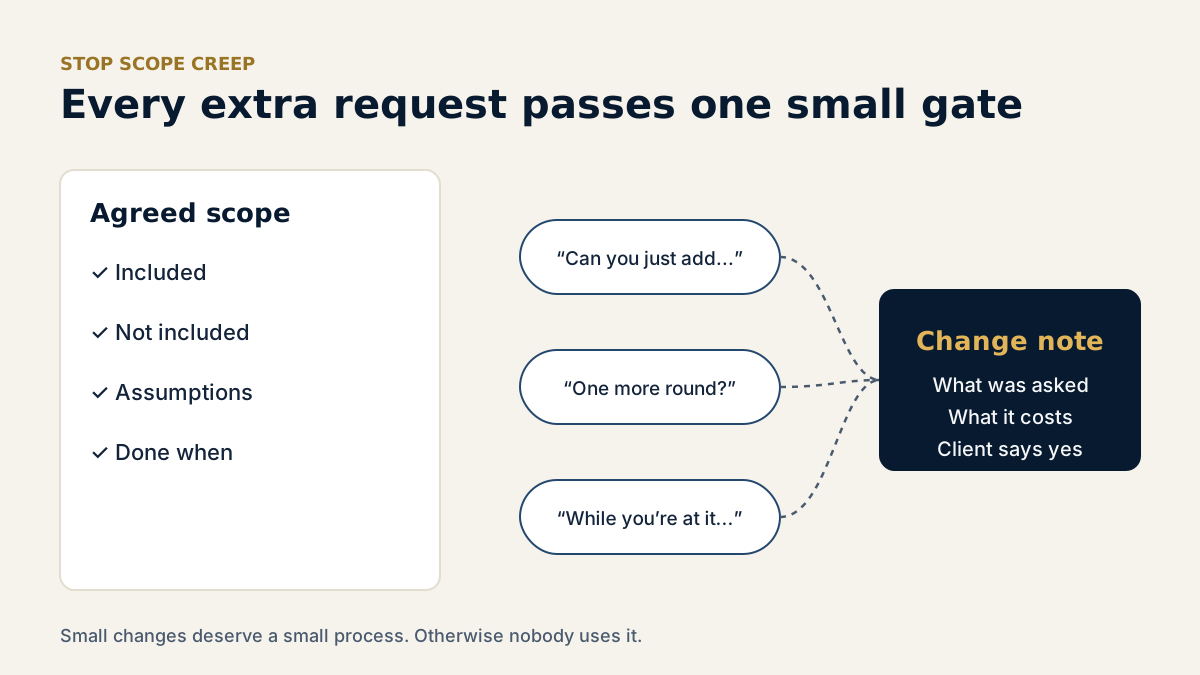
One page: what is included, what is not, what you are assuming, and when it is done. Use their words, not yours. If they cannot read it in two minutes, it will not protect you.
2. Agree how changes work before the first change.
Put one sentence in the agreement: changes are confirmed in writing with the cost and the effect on timing before work starts. Now the conversation is about a process you both agreed to, not about you being difficult.
3. Use a two-line change note.
What was asked, and what it costs. Send it by email or WhatsApp and ask for a simple yes. Small changes deserve a small process, otherwise nobody uses it.
4. Show the value even when you waive it.
If you decide to do something for free, put it on the invoice at its normal price with a "no charge" line. The client sees the goodwill, and next time the conversation starts from a real number.
5. Compare estimate and actual once a month.
Take your last five jobs and compare the time you estimated with the time you spent. The gap tells you whether the problem is scope creep, pricing or both.
When the client pushes back
Avoid defending the contract line by line. Start by naming what you hear, then hand them the choice:
"It sounds like this matters for your launch date. How would you like us to handle it: add it to this phase with the extra cost, or plan it for the next phase?"
A question like that keeps the relationship intact. The client stays in control, and the work stays paid.
Scope and delivery are one of five sections in our free Revenue Leakage Checklist, if you want to score how much this is costing you today. For the wider picture, see Business Operations and Commercial Performance.
Want a second pair of eyes?
The 101 Review is a focused 60-minute session that shows what is broken, what to fix first and the single next step with the most value, in writing within 24 hours.
Filed under: Business Operations & Commercial Performance. Related service: Business Operations & Commercial Performance
This article is general guidance, not financial, tax or legal advice.